Inspiring youth with education is an integral part of India's national strategy for development. In order to overcome the gap between the merits and the means in India, and to help the poor, Government of India has launched an array of innovative schemes intended to offer funding, infrastructure and training to students from all strata of socioeconomic. This guide offers a thorough review of the most powerful Indian student government programs by 2026. It is designed to assist you in understanding how to qualify, benefit, and applications.
1. Financial Assistance & Scholarship Schemes
They are the main tool utilized by the government to lower student dropouts, and also to promote higher education for marginalized and deserving students.
PM-USP (Pradhan Mantri Uchchatar Shiksha Protsahan)
It was created in the Ministry of Education, PM-USP is a renowned "Central Sector Scheme" that will target the 20th percentile of students of students who've completed the 12th grade.
- Advantages: Graduate students get annual payments of Rs 12,000 over three years Postgraduate students are paid each year Rs20,000.
- Eligibility: The family's income has to not exceed Rs4.5 lakh annually.
- How to Apply: Applications are exclusively accepted via the National Scholarship Portal (NSP).
PM YASASVI Scheme
This program is designed specifically for students who belong to Other Backward Classes (OBC) and Economically Backward Class (EBC) and the Tribes that are De-Notified (DNT).
- The benefits: The program covers college tuition charges, gives an annual stipend, as well as offers the laptop allowance in the amount of $45,000 to help students get the best college education.
- Choice: Based on a merit-based test administered by the National Testing Agency (NTA).
National Means-cum-Merit Scholarship (NMMSS)
The primary focus is on secondary schools, NMMSS aims to prevent students from leaving after class 8 because of the financial burden.
- Benefits: The scholarship is 12,000 rupees per annum starting in Class 9 and continuing to Class 12.
- The eligibility criteria: Students must pass a state-level exam to be eligible as well as have a family's that earns less than Rs3.5 lakh.
2. Higher Education & Loan Subsidies
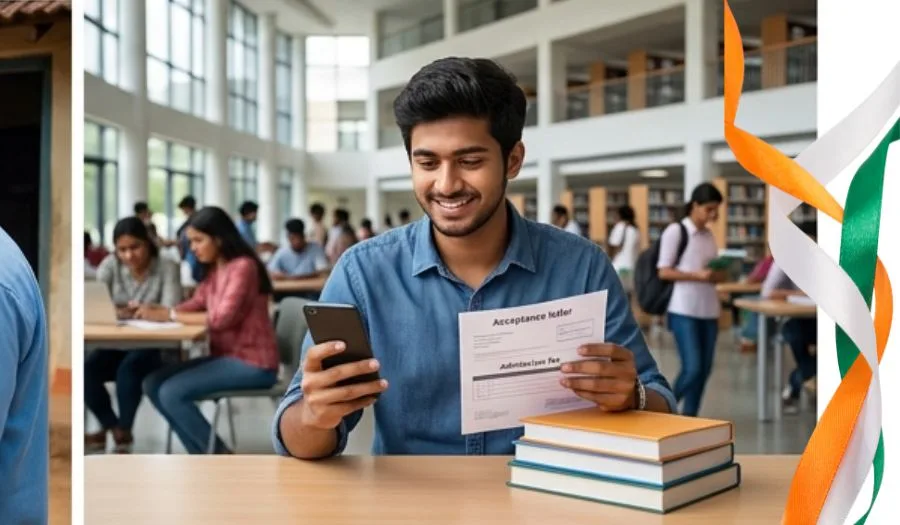
The high costs of professional training courses such as Engineering or Medicine is a obstacle. The government has launched high-interest or interest-free loan structures in order to help solve this problem.
PM Vidyalaxmi Scheme
The first "single-window" portal for students who are seeking loans for education.
- Free Loans: No security or third-party guarantees are required in loans of up of Rs7.50 one lakh.
- Interest Subsidy Students who are eligible with family incomes of as high as the amount of Rs.8 lakh are eligible for the benefit of a subvention of 3% for interest for the duration of the moratorium (course duration plus 1 year).
- Portal The students can submit their applications to multiple banks with the same Common Education Loan Application Form (CELAF) by visiting pmvidyalaxmi.co.in.
Central Sector Interest Subsidy (CSIS)
In this program the government is responsible for paying all interest due on educational loans throughout the period of study to students who are from Economically Weaker Sections (EWS).
-
Scope This is applicable only to technical and professional courses offered in India.
3. Empowerment of the Girl Child
To encourage gender equality in the field of education, special incentive programs are given to female students.
Beti Bachao Beti Padhao (BBBP)
Although it is primarily a campaign to raise awareness, BBBP integrates with the Sukanya Samriddhi Yojana which is which is a savings plan that provides the highest interest rate to help build an account for a girl schooling.
AICTE Pragati Scholarship
The scheme was developed in collaboration with The All India Council for Technical Education The scheme is a support for girls who are pursuing technical degrees, or certificates.
- The amount: Rs50,000 per year in each calendar academic year.
- Ineligibility Two girls maximum per family that have a household income less than 8 lakh.
4. Digital Learning & Innovation Initiatives
In this era of "Digital India," the government has made it easier to access top-quality educational content using various e-learning platforms.
PM e-VIDYA
A comprehensive initiative that unifies all efforts related to digital/online/on-air education.
- DIKSHA: A web-based portal for all states that offers "one nation, one digital platform" to support school learning throughout all states.
- SWAYAM: offers Massive Online Open Courses (MOOCs) beginning in the 9th grade through Post-Graduation. They feature content taken from IITs as well as IIMs.
- SWAYAM PRABHA: A collection consisting of 48 digital television channels that are dedicated to broadcasting top-quality educational programming 24 hours a day.
Atal Innovation Mission (AIM)
AIM concentrates on developing an "scientific temper" among school students.
- Atal Tinkering Labs (ATL): The government offers grants up to 20 lakh rupees for schools in order to set laboratories with 3D printers, robotics, as well as IoT equipment.
- The goal is Students in Class 6-12.
5. Summary Table of Key Schemes (2026)
| Scheme Name | Target Audience | Primary Benefit |
| PM-USP | Meritorious UG/PG Students | Rs12k (UG) / Rs20k (PG) per year |
| PM Vidyalaxmi | Professional Course Aspirants | No collateral-free loans of as high as Rs7.5L |
| PM YASASVI | OBC/EBC/DNT Students | The full tuition cost plus Laptop Grant |
| AICTE Pragati | Girl Students (Technical) | Annually, Rs50,000 |
| NMMSS | Class 9-12 (EWS) | 12,000 rupees per calendar year |
| Ishan Uday | North Eastern Region Students | Amount of Rs7,800 per month Stipend |
How to Avoid Scams and Apply Safely
As more and more students are using "government" portals, students should be vigilant. Be sure to follow the EEAT (Experience Expertise, Expertise, Authority and trustworthiness) guidelines when applying:
- Verify the Domain True government websites will always start with .gov.in or .nic.in. Beware of websites that end in .com or .org where they request "registration fees."
- National Scholarship Portal (NSP): This is the sole authorized central platform for many central scholarships. Don't divulge the details of your OTP or bank account details with other apps.
- Aadhaar Seeding Make sure your account at the bank is connected with your Aadhaar card. The majority of benefits are distributed through Direct Benefit Transfer (DBT) to prevent the leakage of funds.
- Free Processing Fees A majority of federal loans and scholarships are not subject to fees for application. If you find a website that asks for money in order to "process" your scholarship, you are likely to be scammed.
Conclusion
The world that surrounds Indian education is shifting away from "access" to "quality and affordability." No matter if you're a student in need of an affordable financial assistance or an aspiring university student who is seeking a student loan or a student loan, the Indian government offers a structure to help.
To get the latest details, students must frequently go to this site regularly. National Scholarship Portal as well as their official Ministry of Education site. It is your right to be educated so make sure you take advantage of the programs available to help you build the foundation for a better future.