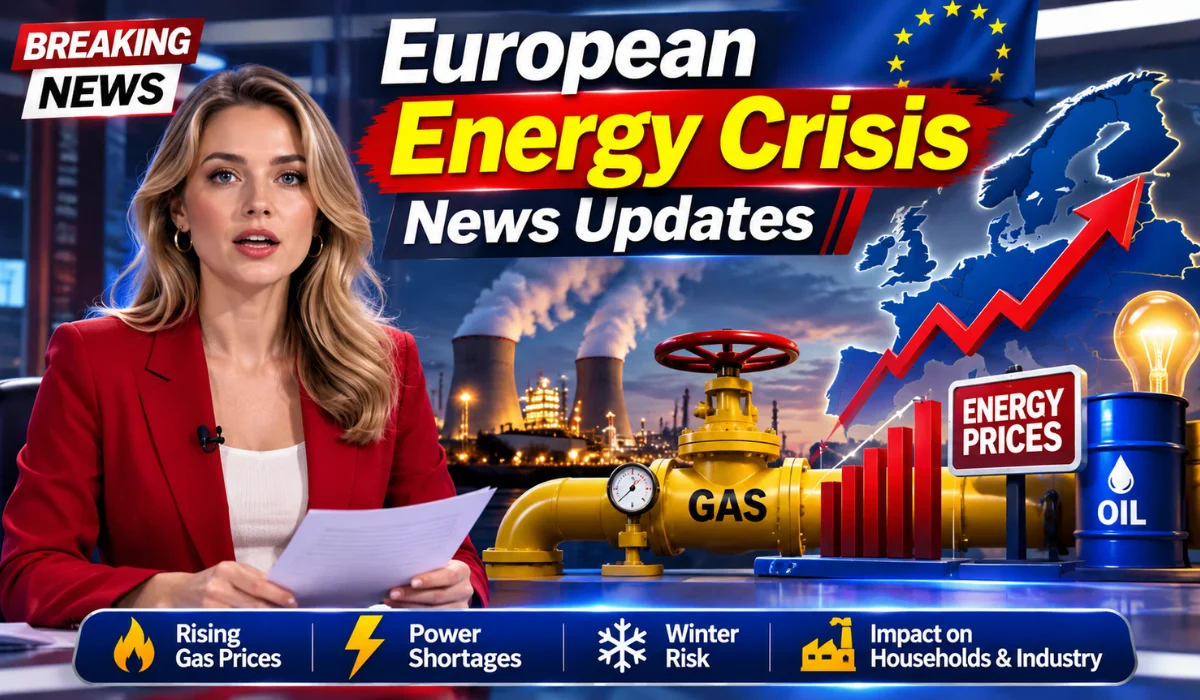
Hey there! If you turn on the news lately, you probably hear a lot about power bills, gas pipelines, and strange-sounding words like European Energy Crisis News Updates. I live and breathe energy research, and I know how confusing it can feel when headlines talk about wholesale markets and gas reserves. Today, I want to break down everything simply. Whether you are a student, a curious reader, or just someone trying to figure out why your family heating bill looks so strange, I have got you covered. Let us dive right in and look at what is truly happening across the continent!
What Are the Latest European Energy Crisis News Updates?
When I look at the newest reports, I notice that things are changing very fast. European Energy Crisis News Updates show that countries are working hard to move away from old fossil fuels, but the journey is bumpy. Right now, governments are trying to completely stop importing certain fuels from Russia. While this is a big step for long-term safety, it creates short-term hiccups. You might wonder: Why does this matter to me? Well, when countries change where they buy their oil and gas, the transport costs go up.
Here are a few quick facts about what is happening right now:
- Storage levels: Countries are rushing to fill underground gas tanks before winter.
- New suppliers: Nations are buying more liquefied natural gas (LNG) from places like the United States and Norway.
- Green push: Wind and solar farms are expanding, but building them takes time and money.
"Energy security is no longer just about keeping the lights on; it is about building an independent system that protects everyday households from global shocks." — Dr. Elena Rostova, Senior European Energy Analyst
Read Also: Europe Airline Business Latest News: Trends And Market Growth
Why Is the European Energy Market Experiencing Uncertainty?
Have you ever tried to balance a bunch of plates on sticks? That is kind of what the European energy market feels like today! Why is the European energy market experiencing uncertainty? It is a question I get asked all the time.
The main reason is that Europe used to rely very heavily on cheap pipeline gas from a single main supplier. When political conflicts broke out, those pipes slowed down or stopped. Suddenly, leaders had to scramble to find new energy sources overnight.
Another big puzzle piece is weather and green transition challenges. Sometimes the wind does not blow, and the sun does not shine enough. When that happens, power plants have to rely on backup fuels, which can get very expensive very quickly. This mix of shifting politics, changing weather, and high building costs creates a rollercoaster for energy prices.
Top 10 European Energy Crisis News Updates You Need to Know
To help you stay ahead, I put together a quick list of the top ten things happening in the energy world right now:
- Pipeline Shifts: Ports are receiving record shipments of tanker-delivered gas from friendly global partners.
- Storage Mandates: EU laws require storage tanks to stay filled past high percentage targets before cold months arrive.
- Price Pressures: Electricity bills are slowly easing from their worst historical peaks, but they are still higher than they were a few years ago.
- Wind and Solar Growth: Billions of euros are going into European offshore wind energy investments.
- Nuclear Debates: Some countries are building new reactors, while others are phasing old ones out, creating a split strategy for European nuclear energy developments.
- Carbon Goals: Strict European carbon emission reduction targets are pushing factories to clean up their acts.
- Grid Upgrades: Old power lines are getting smart upgrades to handle clean energy better.
- Corporate Deals: More big companies are buying clean power directly from wind farms through special contracts.
- Inflation Worries: European energy inflation latest news shows that expensive fuel pushes up the price of everyday groceries and goods.
- Household Support: Governments are handing out targeted aid to help vulnerable families pay their utility bills.
How Is Europe Responding to the Energy Crisis?
When the big crunch hit, leaders did not just sit back. How is Europe responding to the energy crisis? They launched massive backup plans! First, they teamed up to buy gas together so individual small countries would not have to fight each other for supplies. Second, they set strict rules to save power during peak hours.
Most importantly, they are doubling down on home-grown power. By building more local solar panels and wind turbines, Europe hopes to protect itself from faraway political fights. As energy expert Marcus Lindner notes: "The best way to stay warm in winter is to generate your own heat right in your backyard."
Latest Updates on European Electricity Price Increases
Let us talk about money. Nobody likes seeing a bigger number on their monthly bill! Latest updates on European electricity price increases reveal a mixed picture. On one hand, average household electricity prices dropped slightly by a couple of percentage points recently, giving families a tiny bit of breathing room. On the other hand, wholesale prices still jump up and down whenever a cold snap hits or when wind speeds drop.
- The Good News: Prices are way below the crazy record highs we saw during the initial panic.
- The Tricky Part: Prices are still staying well above historical averages from years past, meaning budgeting is still tough for many families.
Impact of Energy Crisis on European Households and Rising Costs
When power gets pricey, everything else gets pricey too. The impact of energy crisis on European households goes way beyond just turning on the lights. Think about it: factories need energy to bake bread, make clothes, and ship toys to stores. When factories pay more for power, they pass those costs down to us. This leads directly to rising energy costs across European countries and general inflation.
Many lower-income families face tough choices between heating their homes and buying fresh food—a painful problem known as energy poverty in European households. Charities and local governments are stepping up with food and heating banks, but it remains a heavy burden for everyday people.
Renewable Energy Integration and Infrastructure Resilience
To fix the problem for good, engineers are focusing heavily on renewable energy integration in Europe. This means plugging thousands of new wind turbines and solar arrays into the main electrical grid. However, adding green energy is like adding new players to a sports team; everyone has to learn how to pass the ball smoothly. Because the sun does not shine at night, European energy infrastructure resilience relies heavily on giant batteries and smart digital networks. These smart grids store extra energy when it is sunny and release it when people turn on their lights at night.
Read Also: European Data Protection Regulation News: What Businesses Must Know
The Path Forward: Transition and Emission Targets
Even through all these hurdles, leaders are keeping their eyes on the prize. The ultimate goal of the energy transition in the European Union is to create a clean, safe, and independent power network. Strict European carbon emission reduction targets mean that dirty coal plants are slowly retiring for good. By leaning into clean technologies, the continent hopes to clean up its air while keeping its economy strong and stable for the next generation.
Frequently Asked Questions
What caused the initial European energy crisis?
The crisis was triggered heavily by sudden supply drops and geopolitical conflicts, especially the reduction of pipeline gas deliveries. This forced countries to look for new fuel sources all at once.
Are electricity prices ever going back to normal?
While prices have come down from their historical peaks, experts believe they will stay slightly higher than past decades due to the costs of building new green infrastructure and buying alternative fuels.
How are ordinary families coping with high bills?
Many families are upgrading to energy-efficient appliances, adding better home insulation, and receiving targeted financial support from local governments.
Conclusion
Navigating the changing energy world can feel overwhelming, but staying informed is our best tool. European Energy Crisis News Updates show us that while challenges like high bills and market uncertainty are still around, innovation, green power, and smart teamwork are paving the way to a brighter, safer future.