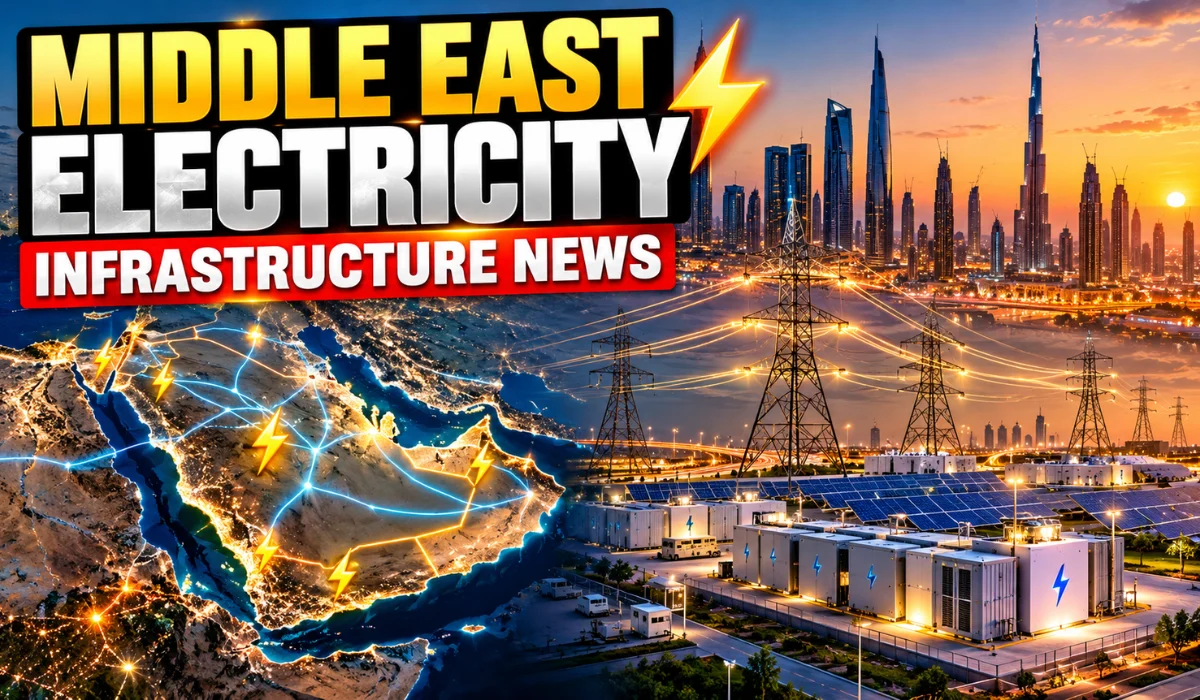
Hey there! If you love looking at how big energy systems work, you are in the right place. Today, we are diving deep into Middle East Electricity Infrastructure News. The power grid across the Middle East is changing faster than ever. From massive solar parks in the desert to smart grid automation, countries in this region are building the power network of tomorrow. Let us explore what is happening right now, why the changes matter, and how these incredible projects are shaping our world.
What Are the Latest Power Grid Developments in the Middle East?
When we look at Middle East Electricity Infrastructure News, the biggest story is how fast power grids are upgrading. Governments are moving past just building power plants. Now, they are focusing heavily on modernizing transmission lines and smart distribution networks. I always get excited when I see how new tech changes things. In places like the UAE and Saudi Arabia, engineers are installing smart meters and digital sensors across the entire grid. This means operators can spot a minor fault before it causes a blackout.
- Smart Grid Upgrades: Digital tools help manage electricity flows in real time.
- Battery Energy Storage: Massive battery systems are being connected to store solar energy for nighttime use.
- Cross-Border Ties: Neighboring countries are linking their power lines together to share electricity when demand peaks.
These updates ensure that homes, schools, and hospitals keep running smoothly, even on the hottest summer days when air conditioning use shoots up.
Read Also: Middle East Security Situation News Today: Latest Regional Updates
Why Is Electricity Demand Increasing Across the Middle East?
Have you ever wondered why power consumption keeps climbing year after year? The answer comes down to rapid population growth, expanding cities, and a booming digital economy. When I look at the numbers, three main drivers stand out. First, the weather is hot, which means cooling systems run constantly. Second, industrial hubs and huge new gigaprojects require massive amounts of baseline power. Third, the rise of artificial intelligence and data centers has created a brand new wave of electricity demand.
- Population and Urban Growth: More families moving into modern housing developments.
- Industrial Expansion: New factories, manufacturing plants, and water desalination facilities.
- Digital Transformation: Data centers running day and night to support cloud computing and AI tech.
Meeting this rising demand requires careful planning. Energy leaders are working around the clock to ensure supply keeps pace with growth without harming the environment.
Top 10 Middle East Electricity Infrastructure News and Updates
Keeping track of big projects can feel tough, so let us break down the top updates shaping the region right now.
1. Gulf power generation capacity expansion
Utility companies are pushing hard to bring more clean megawatt capacity online. Solar and wind projects are scaling up to match national net-zero goals.
2. Middle East power station construction news
New combined-cycle gas turbine plants and solar installations are rising across the desert, offering cleaner and more efficient power generation.
3. Oman electricity network expansion news
Oman is actively extending its main transmission corridors to connect remote wind and solar farms to urban centers, boosting overall network stability.
4. Jordan electricity grid development updates
Jordan continues to integrate high shares of renewable energy by upgrading its national dispatch centers and adding local storage solutions.
5. Middle East energy security developments
Protecting critical energy assets against cyber threats and physical challenges has become a top priority for regional utility directors.
6. Regional power grid integration initiatives
Neighboring states are building high-voltage direct current (HVDC) interconnectors to trade power freely across borders when local deficits occur.
7. Middle East electricity demand growth
With hot climates and thriving economies, managing peak summer loads is driving creative demand-response programs.
8. Electricity grid reliability in the Middle East
Advanced monitoring tools and automated switches are cutting outage times down to mere seconds.
9. Middle East grid automation technology
AI-driven software platforms are taking over routine grid balancing tasks, making power delivery smarter and cleaner.
10. Large-scale battery storage deployments
Multigigawatt-hour battery storage contracts are transforming how operators store daytime solar energy for evening peaks.
Read Also: Middle East Clean Energy Developments: 2026 Green Revolution
How Is Electricity Infrastructure Changing Across the Middle East?
The physical look of the power grid is shifting dramatically. Years ago, electricity came almost entirely from oil and gas generators located near cities. Today, massive clean energy farms sit out in open desert spaces miles away from urban centers. This shift means engineers must build ultra-high-voltage transmission lines to carry power over long distances. I love seeing how innovation solves these layout challenges. Advanced composite materials make power lines lighter, stronger, and better equipped to handle extreme desert heat.
Latest Electricity Infrastructure Developments in the Middle East
Staying updated means looking closely at what engineering teams complete each month. Recent project completions show a strong focus on hybrid energy setups. For instance, pairing solar panels with large battery units ensures that power generation does not stop when the sun goes down. Furthermore, modern water desalination plants now run directly on dedicated solar power, saving fossil fuels for other essential uses.
- Solar-Powered Desalination: Clean energy drives fresh water production.
- Advanced Substations: Digital substations replace older analog equipment for safer operations.
- Cross-Border Interconnections: Grid links between nations provide a reliable safety net during emergencies.
Middle East Power Generation Infrastructure News
Power generation news in the region is all about diversification. While natural gas remains a reliable baseload fuel, solar photovoltaic parks and wind farms are expanding at a record pace. Projects like the massive solar parks in the UAE and wind farms in Saudi Arabia and Egypt show that clean energy is scaling up globally. These plants generate thousands of megawatts, proving that utility-scale renewables can thrive in harsh desert environments.
Middle East Power Station Construction News
Construction sites across the region hum with activity day and night. Building a modern power station requires precise timing, heavy logistics, and advanced engineering talent. From gas-fired cogeneration units that supply both electricity and steam to industrial plants, to massive green hydrogen production facilities, construction updates highlight a region in constant motion. Workers assemble giant wind turbines and vast fields of solar panels with incredible speed.
Oman Electricity Network Expansion News
Oman is making fantastic strides in strengthening its domestic power grid. By connecting rural communities and industrial zones to the main national transmission backbone, the country ensures stable power for all residents. Recent reports highlight new transmission lines designed to evacuate green energy from upcoming wind and solar resource zones. This careful planning keeps Oman's energy sector resilient and ready for future growth.
Jordan Electricity Grid Development Updates
Jordan has positioned itself as a regional leader in adopting renewable energy. With high solar irradiance and great wind speeds, the country generates a significant share of its electricity from natural sources. Recent grid development updates focus on upgrading dispatch systems. These smart upgrades allow Jordanian grid operators to balance intermittent wind and solar power seamlessly without risking stability or causing local outages.
Read Also: Middle East Energy Investment News: Projects Shaping 2026
Expert Opinions and Insights
To understand what drives these changes, let us look at what industry experts say about Middle East Electricity Infrastructure News.
"The energy transition in the Middle East is no longer just about building more generation capacity; it is about modernising the entire digital backbone of the grid." — Dr. Tariq Al-Hassan, Regional Energy Systems Analyst
Experts emphasize that software, automation, and grid flexibility matter just as much as building new power stations. As artificial intelligence and tech companies demand more power, upgrading the grid ensures long-term reliability for everyone.
Frequently Asked Questions
What is the main focus of Middle East Electricity Infrastructure News?
The main focus is on smart grid automation, renewable energy integration, battery storage expansion, and cross-border power sharing to meet surging electricity demand.
Why is electricity demand growing so fast in the region?
Demand is driven by hot climates requiring heavy cooling, expanding urban populations, growing industrial sectors, and new power-hungry data centers.
How do battery storage systems help the power grid?
Battery systems store excess solar energy generated during peak daylight hours and release it back into the grid during the evening when electricity demand spikes.
Are Middle Eastern countries connected to each other's power grids?
Yes! Regional power grid integration initiatives allow neighboring countries to trade electricity and support each other during unexpected power shortages.