The current landscape of social security as well as economic development in India is driven in large part in part by Central Government schemes. These schemes, commonly called Centrally sponsored schemes (CSS) or Central Sector Schemes which are intended to close the socio-economic divide and provide a security cover for vulnerable people as well as propel the country towards achieving the dream that is Viksit Bharat (Developed India). In 2026 it is believed that the Indian government is reducing many of these schemes, with a focus specifically on "Saturation Coverage"--ensuring that each eligible citizen is able to receive benefits with no leaks. This article offers a comprehensive and categorised list of most significant schemes that are currently in use.
1. Healthcare and Social Security
Healthcare is still a major priority for the federal government, which is moving away from just infrastructure construction to a more comprehensive health guarantee.
Ayushman Bharat - PM Jan Arogya Yojana (AB-PMJAY)
It is often referred to as the largest health insurance program It provides coverage of five lakhs per family annually for hospitals for secondary and tertiary health care.
- Important Version Update (2026): The scheme is now universally available for every elderly people who are 70 or older regardless of financial status.
- Effect: It covers over 12 crore families in need, providing paperless and cashless accessibility to the services.
Pradhan Mantri Suraksha Bima Yojana (PMSBY) & Jeevan Jyoti Bima Yojana (PMJJBY)
They are insurance plans that cost little targeted at the unorganized segment.
- PMSBY It provides the protection of disability and accidental death at Rs 2 lakh, with the cost of $20 per year.
- PMJJBY Life insurance coverage of 2 lakh at the cost of Rs436 for each year.
Atal Pension Yojana (APY)
A major social security plan that provides a monthly income (Rs1,000 up to the amount of Rs 5,000) to those who subscribe after retirement age of 60. It's designed primarily for people working in the informal sector in order to provide financial stability as they age.
2. Agriculture and Rural Development
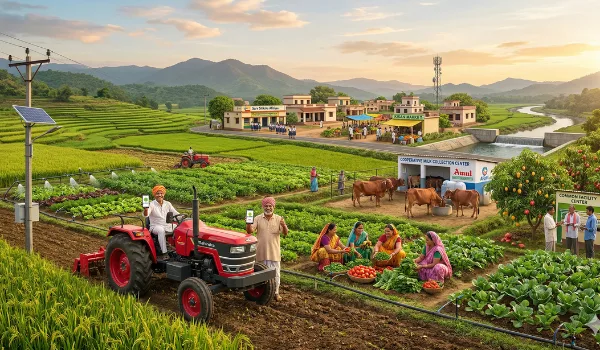
As a large portion of people relying to agriculture, these plans are designed to ensure stability in income and improve rural infrastructure.
PM-Kisan Samman Nidhi (PM-KISAN)
The scheme allows the eligible families of landholders are paid an annual income of Rs6,000 in equal three payments. By 2026, government officials will integrate the Bharat-VISTAAR platform. It is an AI-enabled advisory tool for farmers that can help them improve their crop yields using actual-time information.
Jal Jeevan Mission (JJM) 2.0
The initial goal was to offer access to a functional water tap for every rural household in 2024. The mission is now JJM 2.0.
- The goal is Providing 24x7 access to water as well as "Source Sustainability."
- Present Status: As of early 2026, nearly 81 percent of households in rural areas are provided with water. This mission is now focused upon "Sujalam Bharat," a digital framework that allows continuous monitoring of water quality in real time.
Pradhan Mantri Fasal Bima Yojana (PMFBY)
It's an institutionalized insurance program that shields farmers from non-preventable natural risk starting from pre-sowing up to post-harvest stage with a low cost (2 percent in the case of Kharif, 1.5% for Rabi).
Read also: Indian Govt Schemes For Students
3. Financial Inclusion and Entrepreneurship
The empowerment of those at the "Bottom of the Pyramid" by establishing formal banks and credit access has been a key element of the current economic policies.
Pradhan Mantri Jan Dhan Yojana (PMJDY)
As the foundation of financial inclusion, PMJDY ensures that every household owns at least one basic bank account. These accounts serve as the principal method used for Direct Benefit Transfer (DBT), preventing the corruption of middlemen.
Pradhan Mantri Mudra Yojana (PMMY)
Mudra offers loans without collateral to micro-entrepreneurs.
- Shishu: Loans up to Rs50,000.
- Kishor Credits ranging from Rs50,000 up to 5 lakh.
- Tarun The loan amount is from 5 lakh, up to a maximum of Rs 20 lakh (limit recently increased to help expanding MSMEs).
PM SVANidhi
Special micro-credit facilities that allows street sellers to get credit for capital-based working. This has helped in helping urban employees into the formal financial system.
4. Housing and Urban Infrastructure
"Housing For All," or the "Housing for All" mission remains a major driving force for the social welfare system as well as the industry of construction.
Pradhan Mantri Awas Yojana (PMAY - Urban & Gramin)
PMAY offers financial aid and interest-free loans for EWS (Economically Weaker Sections) as well as LIG (Low income Groups) to construct or buy "pucca" houses. In 2026, the emphasis will be on finishing the last phases of housing in rural areas and encouraging green homes in urban areas.
PM e-Bus Sewa
The initiative was launched to boost the city's bus service The scheme will focus on deploying 10,000 electric vehicles in 169 cities. It is aimed at promoting eco-friendly mobility as well as reducing emissions of urban transportation.
5. Education, Skill Development, and Employment
In order to tap into India's population dividend The government has announced numerous future-proof initiatives.
Prime Minister's Internship Scheme (PMIS)
It was launched in the latter half of 2024 and then expanded into 2025-26 the program aims to offer the opportunity to intern 1 crore young people in the top 500 firms for five years. This scheme is a bridge between the academic curriculum and business needs.
PM SHRI Schools
The Pradhan Mantri Schools for Rising India initiative aims to modernize 14,500 schools in order to show the progress made in the implementation of National Education Policy (NEP) 2020. They serve as mentors to other schools within their respective regions.
National Apprenticeship Promotion Scheme (NAPS)
NAPS gives an incentive to businesses in order to recruit apprentices. The goal is to raise the participation of the apprentices 2.4 million to 50 lakh by the end the decade.
6. Women and Child Development
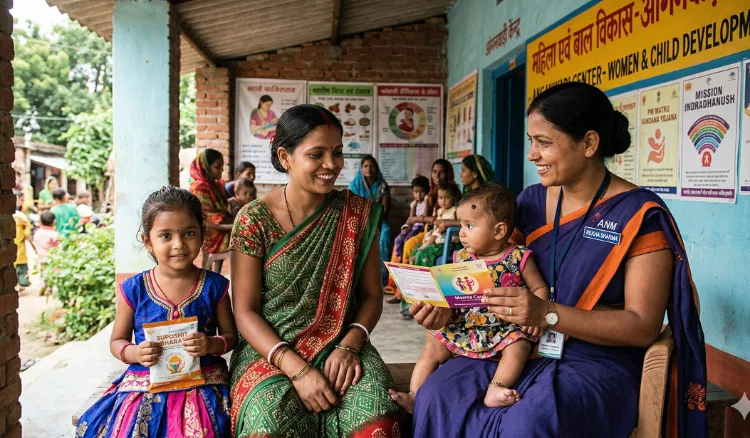
The welfare programs in this area adhere to an "Life Cycle" approach, aiding women throughout their pregnancy and into the age of.
Lakhpati Didi Scheme
An enormous push towards rural women's empowerment. It aims to help 3 crore women who belong to Self-Help Groups (SHGs) to make a yearly minimum of one lakh.. The program provides plumbing training and LED bulb manufacturing and drones (Namo Drone Didi).
Sukanya Samriddhi Yojana (SSY)
A part of the Beti Bachao Beti Padhao campaign It is a savings plan with high interest specifically for girls that is designed to cover the cost of education for her in the future and wedding cost.
Summary Table of Key Schemes (2026)
| Sector | Scheme Name | Primary Benefit |
| Health | Ayushman Bharat (PM-JAY) | Rs5 Lakh health cover (includes 70+ seniors) |
| Agriculture | PM-KISAN | Rs6,000 annual direct income support |
| Finance | PM Mudra Yojana | No collateral-free loans of as high as Rs.20 lakh |
| Water | Jal Jeevan Mission 2.0 | Tap water potable available to each rural household |
| Housing | PMAY | Aid to finance "Pucca" houses |
| Employment | PM Internship Scheme | Skills training at the top 500 firms |
| Women | Lakhpati Didi | Financial empowerment for SHG members |
How to Check Eligibility and Apply
In 2026, the federal government has made it easier to discover this kind of scheme through MyScheme, a portal for analyzing schemes. myScheme website.
- Go to myScheme.gov.in: This is an all-in-one search and discovery platform.
- Input Details: Provide basic information including gender, age state, socio-economic classification.
- Discovery It will show the various Central and State schemes that you may be qualified for.
- Applications: Most schemes now permit online applications through the portal or the UMG App.
Conclusion: The Path Toward 2047
These Central Government schemes of 2026 do not just focus on the reduction of poverty; they're focused on technological and economic integration. In addition to providing drones to female farmers, to providing AI-driven agricultural advice, these projects are designed to create India an "Viksit Bharat" by 2047.
To citizens, being up-to-date on these programs is the first step to secure their social and financial future. Be sure to apply via legitimate government channels (.gov.in) to stay clear of scams and to ensure that your information is protected.