
In a nation that more than a quarter of its people depend on agriculture to earn their daily income, the well-being of farmers is inextricably linked with the economic prosperity of the entire nation. Since the beginning of this 10 years in particular, in the last decade, Indian government has changed its attention on "food security" to "income security," by launching various schemes created to limit risk, upgrade infrastructure as well as provide financial protections directly. In 2026, these projects are evolving into a digital-first technology-integrated system. From cash-on-hand transfers directly to farming using drones Here is a comprehensive review of the most important programs of the government that benefit Indian farmers at present.
1. PM-KISAN: The Financial Safety Net
The Pradhan Mantri Kisan Samman Nidhi (PM-KISAN) remains the foundation of direct income assistance. In recognition of the fact that marginal and small farmers are often struggling to pay the initial costs for fertilisers and seeds This central sector program ensures a constant stream of cash.
- The benefit: Eligible farmer families are paid an annual amount of Rs6,000 and are paid in equal installments of Rs2,000 direct into their accounts linked to Aadhaar.
- Effect: By March 2026 the program will be at its 22nd installment. It will benefit more than 11 million farmers. This "no-strings-attached" cash helps prevent farmers from falling into the trap of high-interest informal moneylenders during the sowing season.
2. PM Fasal Bima Yojana (PMFBY): Shielding Against Climate Risk
As climate change makes monsoons less predictable and unpredictable, the Pradhan Mantri Fasal Bima Yojana is a vital buffer. It's among the biggest crop insurance programs based on farmer participation.
- Affordable Premiums: Farmers pay a very low premium--2% for Kharif crops, 1.5% for Rabi crops, and 5% for commercial/horticultural crops. Government subsidies the remaining.
- Tech-Driven Claims in 2026, the plan will use the YES-TECH (Yield Estimation System that is based on technology) as well as satellite images to determine the extent of the extent of damage. It reduces the waiting time to receive payouts, and also ensures damages for localized catastrophes like landslides or hailstorms is paid precisely.
3. PM-KUSUM: Energy Independence and Extra Income
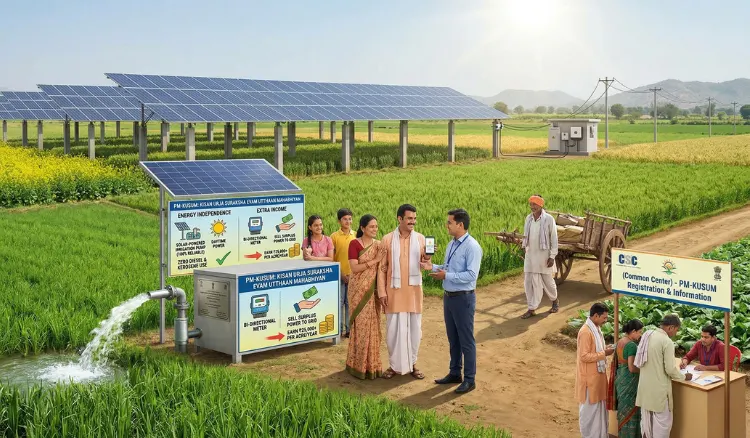
Its PM-KUSUM (Kisan Urja Suraksha, evam Utthaan Mahabhiyaan) scheme has two benefits It frees farmers from the unstable electricity grid, and transforms farmers to "energy entrepreneurs."
- Solar Pumps The government will provide as much as 60% of the subsidy (30 30% Central plus 30 percent State) to install solar power systems.
- Solar Farming Farmers are able to install solar panels in fallow or barren land. Any excess electricity generated could be transferred back to the grid (DISCOMs) which provides an ongoing supply of "harvesting the sun" income even in non-cropping times.
Read also: Indian Govt Schemes For Students
4. Electronic-NAM 1. e-NAM Nation One Market
In the past farmers were confined to selling their products in the local mandis (markets) which were often being a victim of middlemen. A new system called the National Agriculture Market (e-NAM) has dismantled these physical restrictions.
- Pan-India Bidding In 2026 more than 165 mandis are added to this online platform. A farmer from Rajasthan will now be able to get offers from traders within Tamil Nadu.
- Transparency It uses an AI-based quality assaying system to classify products. After a contract is signed then the cash payment will be transferred directly to the farmer's account to ensure they receive the most competitive price possible according to the national demand.
5. PM Krishi Sinchayee Yojana (PMKSY): "Per Drop, More Crop"
The most significant issue is water scarcity. danger for Indian agriculture. PMKSY concentrates on the end-to-end solution for the water supply chain.
- Micro-Irrigation This "Per Drop More Crop" component offers substantial subsidies (up 60 percent for small-scale farmers) to irrigation systems that drip or sprinkler..
- Performance: These technologies reduce consumption of water by 40% and increase yields of crops by providing the nutrients and water directly to the root (fertigation).
6. Soil Health Card (SHC) Scheme: Scientific Farming
The indiscriminate usage of urea has always damaged Indian soil. It is the soil Health Card scheme brings scientists to the community.
- Individualized Advice: Every two to three years, farmers are provided with an annual report on the nutritional status (macro as well as micro) of their soil.
- Cost Savings Following the fertilizer guidelines in the card, growers are reporting an 15 decrease in their costs for cultivation and a rise in their productivity.
7. Agriculture Infrastructure Fund (AIF)
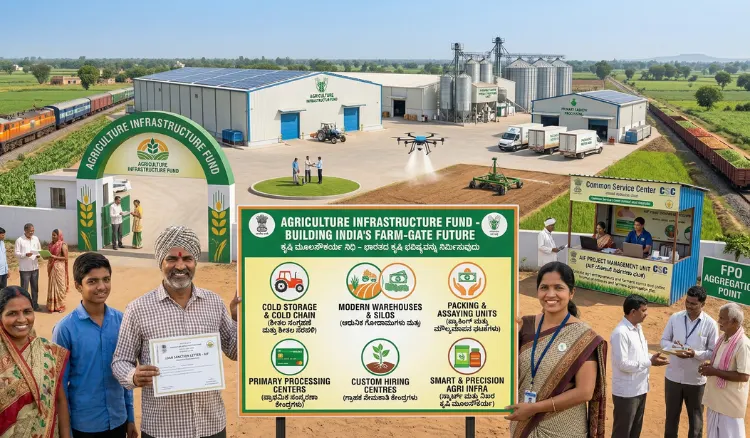
The main reason behind the lower income for farmers is post harvest losses due to the absence of storage. It is because the AIF offers the debt facility of Rs1 lakh crore. multi-service facility.
-
Interest Subvention Farmers and FPOs (Farmer Producer Organisations) as well as startups are able to get loans to build cold storage facilities, warehouses and processing units, with the 3percent interest subvention.
-
Value Addition In allowing farmers to store their crops in lieu of "distress selling" immediately after harvest, this fund lets the farmers wait for better market prices.
8. New Horizons: Namo Drone Didi & Modernization
The government is currently integrating modern technology into the rural landscape. Its Namo Drone Didi scheme helps women Self-Help Groups (SHGs) by giving them agricultural drones.
-
Precision Agriculture These drones are employed to ensure the exact spraying of chemical fertilizers as well as liquid pesticides (like Nano Urea). This safeguards the well-being that the farmers (by avoidance of manual exposure) and also ensures uniform spraying that saves both time and energy.
Read also: List of Central Government Schemes India 2026: A Complete Guide
Summary Table of Key Benefits
| Scheme | Primary Benefit | Financial/Technical Detail |
| PM-KISAN | Income Support | Rs6,000/year (Direct Transfer) |
| PMFBY | Crop Insurance | Premiums are low (1.5 percent - 5-5%) |
| e-NAM | Market Access | Digital bidding across 1,600+ mandis |
| PM-KUSUM | Solar Energy | 60 percent subsidy for solar pumps |
| PMKSY | Irrigation | Subsidies for Drip/Sprinkler systems |
| AIF | Infrastructure | Subvention of 3% in interest for infra-loan loans |
Conclusion
The change in Indian agriculture has gone beyond solely about soil and seeds It is now all about information, credit as well as climate resilience. With the help of these strategies that the Indian government is trying to protect the field of agriculture. As issues such as soil fragmentation and the depletion of groundwater are still present, the digital and financial system created in these policies from 2026 offers the possibility of an economically viable and long-term development for those who are the Indian farmer.