
India has reached the 50percent mark of its electricity generation capacity that is derived using non-fossil sources of energy and has achieved its COP26 targets five years earlier than expected. The heart of the "Saffron Revolution" is a set of aggressive government programs that aim to make solar power affordable to all Indian citizen. If you're a homeowner seeking "Muft Bijli" (free electricity) or a business owner looking at the PLI manufacturing advantages This is the entire outline of the solar power landscape in India for 2026.
1. PM Surya Ghar: Muft Bijli Yojana (The Game Changer)
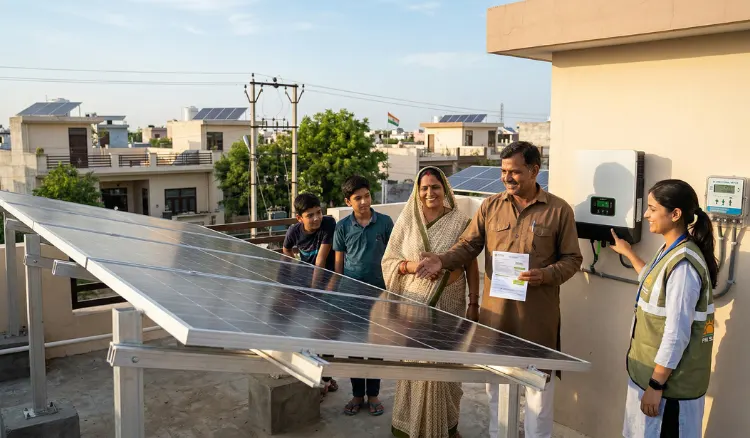
In the early 2024, and at its peak by 2026 The PM Surya Ghar: Muft Bijli Yojana is the main residential rooftop solar program. It is aiming to supply the equivalent of 300 units free power each month to one crore households.
Subsidy Structure (CFA) in 2026
The Central Financial Assistance (CFA) will be credited directly to the account of the person applying within 30 days from the date of application.
- Maximum 2 4 kW: Rs30,000 per kW.
- 3 kW or Above: A fixed maximum subvention of 78,000 rupees.
- Additional State Top-ups States such as Uttar Pradesh (Rs30,000), Odisha (up to Rs 60,000) and Assam (up to the amount of Rs45,000) provide additional assistance over and over the amount of central.
Key Benefits:
- Zero Electricity Charges The majority of households that have three kW systems have a net zero bill.
- Low-Interest Credit: Loans that are collateral-free can be obtained for that range from 7.7% to 11 percent Some PSU banks offering less expensive rates on PMSG-linked projects.
- Easy Application Completely digital via the [suspicious URL removedwebsite.
Read also: Indian Govt Subsidy Schemes For Startups
2. PM-KUSUM: Empowering the "Annadata" (Farmers)
The Pradhan Mantri Kisan Urja Suraksha evam Utthaan Mahabhiyaan (PM-KUSUM) remains the central element of rural solarization. In 2025, more than 20 lakh farmers were already benefiting.
The Three Components:
- Component A The installation of small solar power stations (500 kW - 2 MW) in barren/fallow areas. Farmers are able to sell their energy to DISCOMs in exchange for a stable annual income of 25 years.
- Component B: Installation of Standalone Solar Pumps. Government provides 60 percent subsidy (30% Central and 30 percent State) and the farmer is able with just 10% up front and the remaining 30% being covered by bank loans.
- Component C solarization for existing agricultural pumps that are connected to the grid. Farmers can use solar power for irrigation, and then return excess power into the grid.
3. Production Linked Incentive (PLI) Scheme
In order to achieve "Atmanirbhar Bharat" in solar production, the government has made the move to Tranche I and Tranche III as part of the PLI Scheme for High-Efficiency Solar PV Modules.
- The goal is Reduce dependence of imports on wafers and solar cells.
- The impact 2026 The capacity of manufacturing in India in the Approved List of Manufacturers and Models (ALMM) has been reached at 144 GW annually.
- Investment: Over Rs19,000 crores are allocated to encourage the domestic giants Reliance, Adani, and Tata Power to make modules with high efficiency (Polysilicon to module integration).
4. Solar Park Scheme (Ultra Mega Solar Power Projects)
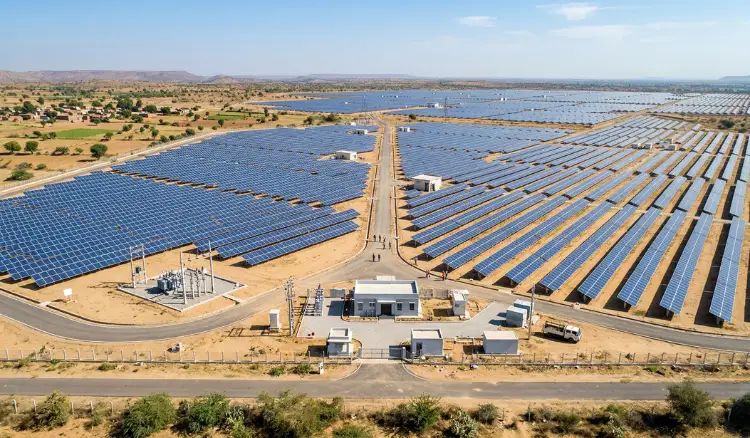
India is the home of one of the largest solar parks. One of them is Bhadla, which is the largest of them all. Bhadla Solar Park located in Rajasthan.
- The goal: The scheme aims to create at a minimum fifty Solar Parks which have the capacity to be combined at 40 gigawatts.
- Infrastructure Support The government offers "plug-and-play" infrastructure, including the land that has all clearances as well as transmission evacuation systems. This reduces the risks for private developers.
5. Grid-Connected Rooftop Solar Programme (Phase-II)
As the Prime Minister Surya Ghar focuses on 1 million households and the Phase II Rooftop Program (extended through March 31st 2026) is still in place to assist the residential sector in general and housing society (GHS/RWA).
-
For GHS/RWA A CFA of 20% is offered for lighting in common areas and infrastructure (up at 500kW).
6. National Programme on High-Efficiency Solar PV Modules
The program is in partnership with the PLI in order to ensure that the technology employed within India is top-of-the-line. It is focused on:
- Bifacial Modules Panels that create energy on both sides.
- High-Efficiency Cells The efficiency threshold is pushed over 22%.
- Local Sourcing Incentivizing local production of EVA sheets, glass as well as backsheets.
Read also: Indian Govt Schemes Benefits For Farmers
Comparison of Major Solar Schemes 2026
| Scheme Name | Target Audience | Primary Benefit | Subsidy/Incentive |
| PM Surya Ghar | Urban/Rural Households | 300 units of power for free | Up to Rs78,000 |
| PM-KUSUM | Farmers/FPOs | Irrigation & Income | 60% Pump Subsidy |
| PLI Scheme | Manufacturers | Atmanirbhar Bharat | Output-linked payouts |
| Solar Parks | Large Developers | Land & Grid Access | Infrastructure support |
| Green Energy Corridor | DISCOMs/States | Power Evacuation | 40% GEC grant |
How to Apply for Solar Subsidy in 2026?
The process has been simplified to cut out middlemen and corrupt.
- Registration: Register on the National Portal for Rooftop Solar or on the PM Surya Ghar app using the number on your account for consumer use as well as your mobile.
- Feasibility Approval Your local DISCOM can offer the technical feasibility and approval.
- installation: Choose an MNRE-registered provider. Be sure to use the ALMM approved modules (mandatory to be subsidised).
- Inspection and Net Metering After the installation, DISCOM sets up the net meter and checks the device.
- Subsidy Release When you submit the Installation report along with a photograph of the device the subsidy is transferred into your account's bank account within thirty days.
Future Outlook: Solar Energy in India (2027-2030)
The current government strategy is to shift to floating Solar (like that of the Omkareshwar 600 MW solar project) as well as Solar-Wind Hybrids to help solve the issue of land acquisition. In addition The National Green Hydrogen Mission will likely to result in huge new demands in solar power, which will serve as the primary source of energy.
FAQs
Do you think solar maintenance is expensive?
No. A majority of solar companies offer five years of maintenance free in the form of a government contract.
Do I qualify for the subsidy I need for an off-grid device?
Currently, central subsidy programs focus on grid-connected systems in order to support stabilization of the grid of the nation.
What's the life span of these panel?
Most Tier-1 panels are covered by a 25-year guarantee.
Conclusion
The convergence of high energy prices, rising subsidies as well as easy financing options 2026 could be the most advantageous time to invest in solar energy in India. It is worth noting that the Prime Minister's Surya Ghar and PM-KUSUM plans are not only environmentally-friendly initiatives; they're also tools to help the average citizen.