
Staying on top of the Australia Agriculture News Today is absolutely vital for anyone involved in the global food and farming industry. From shifting weather patterns across the Outback to the latest crop export values, the Australian agricultural sector is moving faster than ever. Keeping a close eye on these daily updates helps growers, traders, and everyday families understand exactly how fresh food goes from local fields to dinner plates around the world.
What are the latest Australia farming news updates?
The biggest news right now comes from the official government experts at ABARES. They just released their major reports for the winter season. The numbers show a very mixed picture for our hard-working food growers. Total winter crop production is expected to fall by 21% to 54.5 million tonnes.
Why is this happening? It is a mix of dry weather in certain states and the very high price of farm items like fuel and food for plants. However, it is not all bad news! Some parts of the country had great rain recently, and those areas are pushing ahead with full confidence.
Why is Australian agriculture making headlines today?
If you turn on the news, everyone is talking about farms. Why is Australian agriculture making headlines today? The main reason is how global events overseas change the daily cost of running a local family business here.
For example, international shipping issues have pushed the price of urea, a very important type of plant food, up by more than 80%. This forces our growers to make big, fast choices about what they want to plant in their dirt. It shows just how connected our country is to the rest of the world.
Read also: Australia Green Energy Investment News: Latest Clean Tech Updates
Top 10 Australia Agriculture News Today
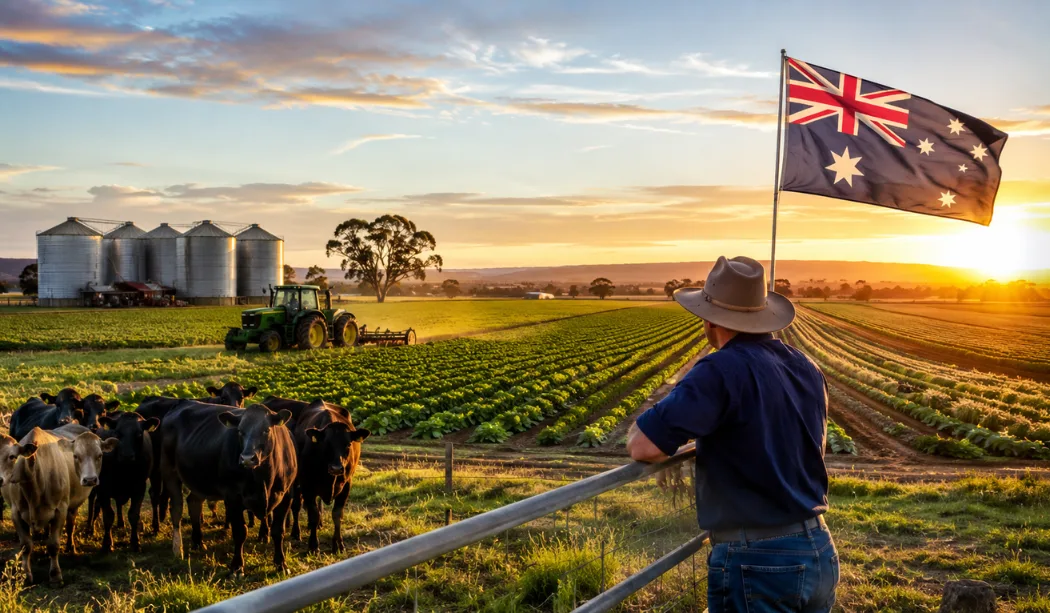
Here is a quick look at the ten biggest things happening across the entire Australia Agriculture News Today landscape right now:
- Total Crop Value Dip: The total value of all farm items is forecast to drop by 5% to 98.3 billion Australian dollars.
- The Wheat Decline: Total space used for growing wheat is dropping by 12% because of dry soils.
- Barley on the Rise: More people are planting barley because it needs less expensive plant food.
- Lentil Super Record: Lentil growth is booming and is set to hit a historic high of 2.2 million tonnes.
- High Input Pressures: Diesel and machinery costs remain very high for family businesses.
- The Big Dry North: Northern areas of New South Wales and Queensland are facing a very tough, dry winter.
- Southern Rain Safety: Western Australia and South Australia have enough deep soil moisture to start well.
- Smart Tech Shift: Almost half of all cattle growers are now using special fence-free rotation tricks.
- Beef Market Strength: International demand for Aussie beef stays strong, keeping animal prices stable.
- Export Earnings Drop: Total earnings from selling food overseas will likely dip to 74.8 billion dollars.
How are Australian farmers adapting to climate challenges?
The weather is changing, and our weather patterns are becoming harder to guess. So, how are Australian farmers adapting to climate challenges? They are doing it by using incredible new ideas and tools!
A brand new national survey shows that 40% to 50% of land managers are adopting fresh practices to survive. Instead of doing things the old way, they use variable-rate spraying tools that calculate exactly how much medicine a plant needs. Many are also switching to natural biofertilisers to heal their soil and save money.
Australia agriculture news today live: The Grain Markets
When we look at the Australia agriculture news today live market boards, grains are seeing the biggest movements. Because the northern areas have very dry dirt, we might see something unusual happen this year.
Grain from Western Australia might need to be put on boats and shipped right over to New South Wales and Queensland just to feed local animals. This shows how our states work together like a team when the weather gets tough.
Understanding the australia crop production news 2026 data
Let us look closely at the numbers from the australia crop production news 2026 updates. The total area used for winter planting has shrunk by 7% down to 23.6 million hectares.
"Farmers' decisions over the last few months have been shaped heavily by seasonal conditions and gross margins." — David Galeano, ABARES Acting Executive Director.
This means people are only planting where they know they have a real shot at making a profit.
Detailed australian agriculture market updates
Let us break down exactly what is happening inside the australian agriculture market updates for the most important items we grow.
The fierce australian wheat vs barley market 2026 battle
There is a massive shift happening between our two main winter grains. In the australian wheat vs barley market 2026, barley is currently winning the hearts of many growers. The australian wheat harvest forecast has dropped by a large 26% down to 26.7 million tonnes. This is the smallest space used for wheat since 2019.
On the other hand, the area used for barley has actually grown by 4%! Why? Because barley is a tough plant that does not require as much expensive plant food as wheat does. It is a smarter, safer choice when money is tight.
What the australian grain export market news shows
According to the latest australian grain export market news, global buyers still love Australian produce. Even though our total volume will be smaller, prices across the world are staying high because Europe and America are also facing dry weather. Our grain is still highly valued by buyers across Southeast Asia and the Middle East.
Comparing australia agriculture vs new zealand agriculture
People often compare our farms to our close neighbors. When you look at australia agriculture vs new zealand agriculture, the scale and styles are completely different. Australia focuses on massive, wide-open spaces for growing grains like wheat and running huge herds of beef cattle. New Zealand is smaller, greener, and gets more regular rain, making it an absolute powerhouse for dairy milk and kiwi fruit. Both countries are world leaders, but Australia must deal with much bigger weather shifts and dry spells.
Livestock and australia farm sector updates
The animal side of our country is also seeing major changes in the latest australia farm sector updates.
The booming sheep farming industry updates
The sheep farming industry updates show that meat prices are holding up very well. Even though numbers are a bit tight, high demand from overseas markets means that sheep managers are getting good returns for their stock. The wool market also saw a fantastic jump earlier in the year, which gives sheep stations a great financial boost.
Global shifts in the australian agriculture market news
The general australian agriculture market news tells us that the cattle industry is in a steady spot. While some dry fields in northern areas forced managers to sell their cows early, strong demand from the United States is keeping the overall industry safe and stable.
The Latest agriculture headlines australia
To keep things simple, the major agriculture headlines australia point to one key lesson: resilience. Whether it is a small family orchard or a massive corporate grain operation, our food producers are proving that they can pivot when challenges arrive. They are managing costs carefully, watching the skies for rain, and using technology to make every single drop of water count.
Frequently Asked Questions
What is the forecast for the 2026 wheat crop in Australia?
The national wheat harvest is expected to fall by 26% down to 26.7 million tonnes due to dry planting conditions in northern states and high input costs.
Why are fertilizer prices so high for Australian farmers?
Global supply issues and conflicts overseas have blocked major trade routes. This has caused the local price of common fertilizers like urea to skyrocket by over 80%.
How are farmers cutting down on their daily costs?
Many growers are switching to low-input crops like barley and pulses. They are also using smart tractors and biofertilisers to use less chemical product on their fields.
Is the livestock market doing well in Australia right now?
Yes! While weather conditions are mixed, global demand for Australian beef and sheepmeat remains very strong, keeping market prices healthy.