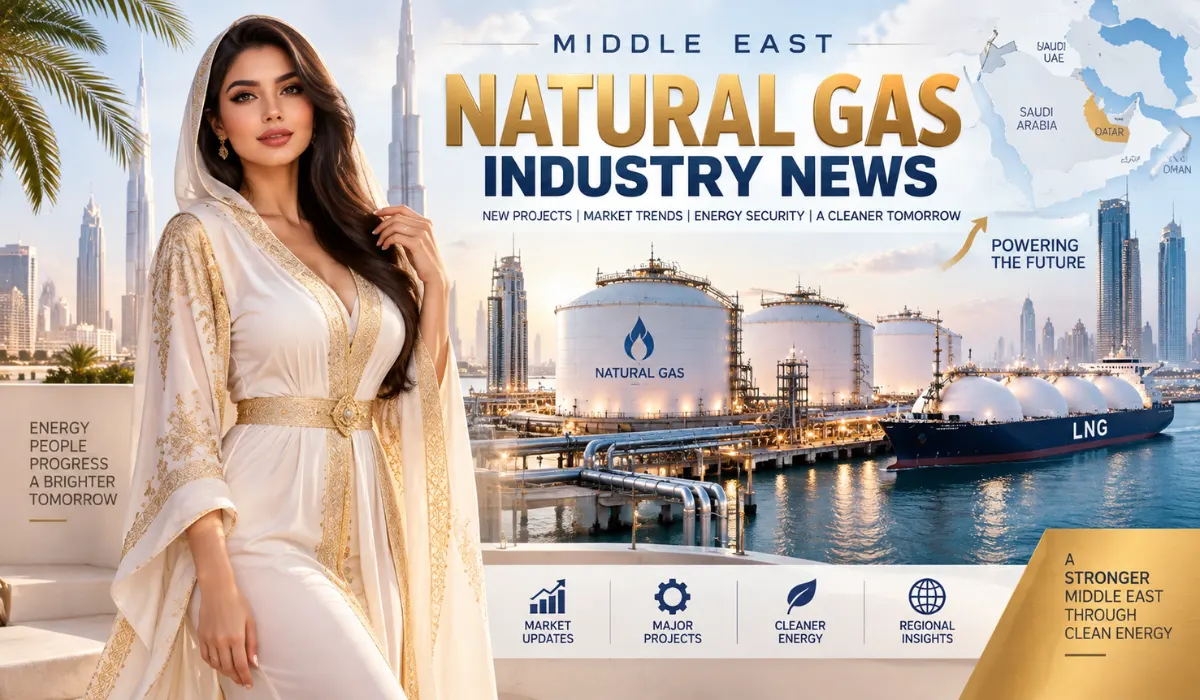
Energy rules our world. It lights our homes, cooks our food, and runs our factories. Right now, major events are shaking up the global energy space. Everyone is looking at the latest Middle East Natural Gas Market News to understand what comes next. The Middle East is a vital heart for global energy. When something happens there, the entire world feels it. From local power bills to international trade routes, the shift in this market impacts us all. Let us dive deep into the biggest stories, trends, and shifts happening right now.
What is Happening in the Middle East Natural Gas Market?
A lot is changing very fast. The region is seeing big changes in how gas is found, cooled, and shipped. Countries like Qatar, Saudi Arabia, and the UAE are spending billions of dollars to build massive gas projects. They want to supply more clean energy to the world.
However, recent geopolitical tensions have caused major bottlenecks. Military conflicts and localized blockades have disrupted traditional trade routes. These sudden events are changing how energy moves across the planet. Security is now the top priority for every energy leader.
Why are Natural Gas Prices Rising Globally?
You might wonder why fuel costs more today. The simple answer is supply and demand. When a major supply source faces trouble, prices shoot up everywhere.
Global oil market news shows that oil and gas prices usually move together. Right now, several factors are pushing global prices higher:
- The Middle East and global energy markets are tightly connected, meaning regional shocks cause quick price spikes globally.
- Severe infrastructure damage in key export zones has reduced physical supply.
- Rising fuel demand in growing economies puts extra pressure on available stocks.
Read also: Middle East Business News Analysis: Top 2026 Market Trends
Top 10 Middle East Natural Gas Market News Items You Must Know

To help you see the full picture, here is a breakdown of the Top 10 Middle East Natural Gas Market News stories driving the industry forward today:
- The Strait of Hormuz Bottleneck: Shipping volumes remain far below normal, keeping global markets on edge.
- Qatar Energy Infrastructure Damage: Recent strikes on major liquefaction plants have cut deep into regional export capacities.
- Massive Expansion Delays: Major new production fields are facing long delays, delaying expected market relief.
- Surging European Demand: European nations are actively buying more Middle Eastern fuel to replace lost pipeline options.
- Record U.S. Export Booms: The current regional crunch has forced the U.S. to ship record amounts of fuel to balance global gaps.
- New Geopolitical Risk Premiums: Extra safety fees and tolls are adding heavy costs to every single cargo shipment.
- Saudi Arabia Domestic Push: The Kingdom is fast-tracking its own massive fields to power local industries and save oil for export.
- The UAE Clean Energy Pivot: New investments are flowing into hydrogen and ultra-low-carbon LNG technologies.
- Asian Demand Destruction: High prices are forcing developing nations in Asia to cut back on clean gas usage.
- The Return of Long-Term Deals: Buyers are rushing away from volatile daily spot markets to sign secure 20-year supply contracts.
Middle East Natural Gas Market News: Tracking the Big 2026 Shift
Understanding the latest Middle East Natural Gas Market News requires looking at the actual numbers. The market has shifted from a state of abundance to a period of absolute scarcity.
Understanding the Latest Middle East LNG Market Developments
The biggest news comes from the liquefied natural gas (LNG) sector. LNG is natural gas that is cooled into a liquid so it can fit onto large ships. Recent disruptions have taken millions of tons of LNG off the market. Experts note that repairing the damaged processing units in the Gulf could take up to three to four years. This means the world will have to live with a tight energy supply for a long time.
Key Middle East Gas Infrastructure Investments
Countries are not sitting still. Massive Middle East gas infrastructure investments are happening right now. Governments are building pipelines that bypass dangerous waterways. They are also investing heavily in floating LNG terminals to make exporting safer and more flexible.
How Can Shipping Delays Affect Global Gas Markets?
When ships get stuck, the whole world waits. This is especially true for energy transport. How can shipping delays affect global gas markets? They create instant shortages in countries that do not have their own fuel sources.
The Strait of Hormuz LNG disruptions are a perfect example. About 20% of the world's LNG flows through this narrow waterway. When traffic drops, ships must take longer, more expensive routes around Africa. This adds millions of dollars in freight costs and delays deliveries by weeks.
Middle East Gas Market vs North American Gas Market
The way gas behaves varies heavily depending on where you look. Let us compare the two largest market forces today.
| Feature | Middle East Market | North American Market |
| Primary Pricing Type | Tied to global oil prices and long-term contracts | Driven by local supply and demand (Henry Hub) |
| Transport Method | Heavily reliant on maritime LNG shipping tankers | High reliance on massive domestic pipeline networks |
| Current Market State | Experiencing high volatility due to security issues | Relatively flat prices due to strong local production |
Middle East LNG vs Russian Gas Supply
For decades, Europe relied on Russian pipelines for its heating and industrial power. As those supplies dwindled, the focus shifted toward the Gulf.
The battle between Middle East LNG vs Russian gas supply is reshaping world trade. Middle Eastern LNG offers a highly reliable alternative to Russian pipeline gas. However, shipping liquid gas on boats is much more complex than moving it through a pipe. The current shipping bottlenecks make this transition slower and more expensive than many had hoped.
Read also: Middle East Banking Sector Analysis: Top 10 Banks & Market Reports
Future Outlook: Natural Gas Price Forecast Middle East
What does the future hold for energy costs? Industry experts have updated their natural gas price forecast Middle East models to reflect this new era of instability. Prices are expected to stay elevated for the next two years. We will not see a return to cheap, pre-conflict pricing until at least 2028. The market will remain highly sensitive to any news regarding trade routes or ceasefire talks.
Expert Opinions on the Global Energy Crunch
"We are facing a historic challenge in global energy security. Resuming normal shipping flows through the Gulf is the single most important variable for stabilizing world economies." — International Energy Insights Team
"With major export facilities offline, global gas supply growth will be much lower than expected. We have entered a market defined by absolute scarcity." — Senior Energy Analyst Group
Frequently Asked Questions
What is the primary keyword to track for regional energy updates?
You should follow the latest Middle East Natural Gas Market News to get real-time updates on price shifts, infrastructure changes, and shipping status.
Why is the Strait of Hormuz so important for gas?
It is a narrow water path where one-fifth of the world’s liquefied natural gas passes. Any disruption there cuts off major supplies to Asia and Europe.
How are high gas prices affecting everyday people?
High wholesale gas prices make electricity more expensive and drive up the cost of manufacturing everyday goods, leading to inflation.